

01 Jan THE ROCK VILLAGE
The Luxurious villa was built in Rock Village in 1915.
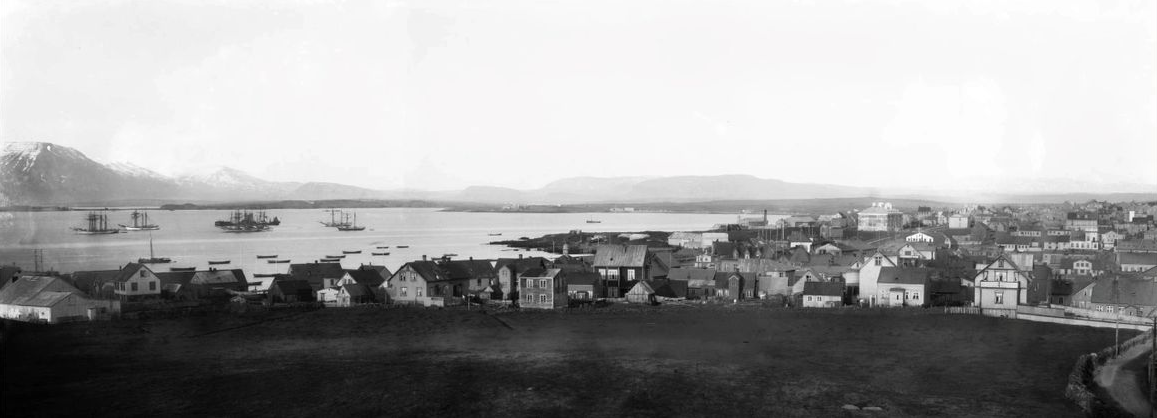
Grjótaþorp (Rock Village) derives its name from Grjóti, one of eight smallholdings on the estate of Reykjavík in the 18th century. The farmstead stood here on Grjótabrekka (Grjóti Slope) at the top of Grjótagata. In the latter half of the 18th century, when wooden buildings were being constructed on Aðalstræti, a cluster of turf houses grew up on the Grjóti property. The turf homes housed landless labourers and fishermen, and staff of the Innréttingar (the New
Enterprises, woollens production on an industrial scale intended to propel Icelandinto the modern age).
The first merchanting Reykjavík, Johan Chr. Sünckenberg, built his commercial premises on Aðalstræti in 1780, after the trading post was moved from offshore Örfirisey to Reykjavík. The warehouses were on adjacent Vesturgata. Grjóti was aptly named (from grjót = rock), and its rocky fields stretched down the hill towards Grófin. In 1790 the rocks were cleared from the grass field, and used in building Reykjavík Cathedral on nearby Austurvöllur. After that the inhabitants started to make gardens on the land. In 1802, 19 houses in Grjótaþorp were inhabited by 141 people. About 20 turf houses remained in Grjótaþorp in 1836, after which they were gradually replaced by wooden buildings. By 1900 no turf houses remained.
Grjótaþorp is delimited by aðalstræti, vesturgata,túngata and garðastræti.
Aðalstræti (Main Street) is the oldest street in Reykjavík, previously known by Danish names Hovedgaden and then Klubgaden. It originated as the path from the farm of Reykjavík to the seashore. The textile workshops of the New Enterprises were located at the southern end of the street, and commercial premises at the north end. Vesturgata (West Street) was previously known as Hlíðarhúsastígur (Hlíðarhús Path) and Læknisgata (Doctor‘s Street): it was the westward route out of town towards the estate of Hlíðarhús and Seltjarnarnes, where the Chief Medical Officer resided. Túngata, previously
Landakotsstígur (Landakot Path), led westwards from Aðalstræti to Götuhús and
Landakot, which were smallholdings on the Reykjavík estate.
The name of Túngata (Grassfield Street) refers to grassfields through which the road led: Ullarstofutún, Götuhúsatún and Landakotstún. Garðastræti (Wall Street) was named after an old rock wall on the boundary of the Grjóti and Götuhús estates. Fischersund, formerly Götuhúsastígur (Götuhús Path) led from Aðalstræti westwards to Götuhús. It was renamed Fischersund (Fischer Alley) in honor of merchant Waldemar Fischer, who founded a charitable fund in 1888 to aid poor widows, fatherless children and needy young people in Reykjavík and Keflavík. This is the only street in Reykjavík named after a Danish merchant. Mjóstræti (Narrow Street) was once known as Brekkustígur (Brekka Path) after a turf house, Brekka, which stood on the site of the present Vinaminni, Mjóstræti 3.
Grjótaþorp fell into a state of dilapidation in the 20th century, due to plans for building a major road through it. That idea was ultimately abandoned, and today all the old wooden houses have been renovated; in addition a number of wooden buildings from other districts have been rebuilt in Grjótaþorp, consolidating the old street plan. Grjótaþorp, one of the oldest extant quarters of wooden buildings in Reykjavík, is characterized by narrow streets with detached wooden houses in small, well tended gardens.